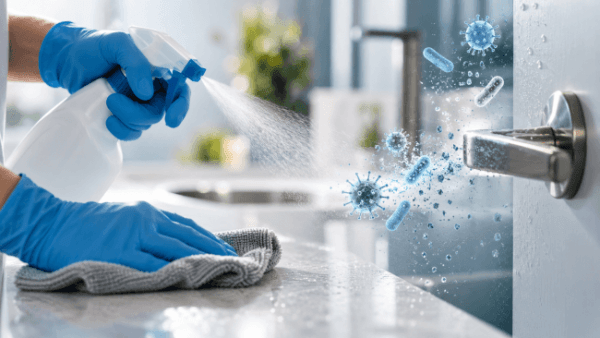
When cleaning our homes, it is easy to assume that every cleaning product kills bacteria. However, this is not necessarily true. Some cleaning products are designed primarily to remove dirt, grease, and dust, while disinfectants are specifically formulated to kill or inactivate certain microorganisms.
Understanding the difference is especially important when cleaning kitchens, bathrooms, restrooms, and frequently touched surfaces.
Cleaning and Disinfecting Are Not the Same
Cleaning is the process of physically removing dirt, dust, grease, and some microorganisms from a surface. For example, wiping a countertop with regular detergent and water can remove a significant amount of bacteria along with dirt and debris.
Disinfection, on the other hand, is intended to kill or inactivate specific microorganisms on surfaces by using appropriate disinfecting products.
In other words, a surface looking clean does not necessarily mean that it is completely free of bacteria or other microorganisms.
Do All Cleaning Products Kill Bacteria?
No. The purpose of a product depends on its formulation and the claims stated on its label.
Regular all-purpose cleaners generally help to:
- Remove dust and dirt
- Break down grease and stains
- Improve the appearance of surfaces
- Remove some microorganisms from surfaces
Disinfectants, however, are specifically designed to work against certain microorganisms. Therefore, it is important to check the product label to understand which microorganisms it is effective against and how it should be used.
Which Surfaces Require More Attention?
Some surfaces in homes and offices are touched much more frequently than others and therefore require regular cleaning.
These include:
- Door handles
- Light switches
- Phones and keyboards
- Kitchen countertops
- Faucets and taps
- Toilet and bathroom surfaces
- Desks and work surfaces
Regular cleaning of these high-touch surfaces helps maintain good hygiene and reduces the buildup of microorganisms.
How Should Disinfectants Be Used Properly?
Simply applying a disinfectant and immediately wiping it away is not always enough. Many disinfectants need to remain on a surface for a specific period of time in order to work effectively.
For this reason:
1. Clean the surface first.If there is visible dirt or grease, remove it before applying a disinfectant.
2. Read the product label.Application instructions, required amount, and contact time can vary from one product to another.
3. Never mix cleaning chemicals.Mixing different cleaning products can create dangerous chemical reactions.
4. Consider the surface material.Some disinfectants may damage certain materials or surface finishes, so always make sure the product is suitable for the surface.
A Clean Home Does Not Mean a Sterile Home
The goal of everyday cleaning is not to make your home or office completely sterile. The aim is to keep surfaces clean, hygienic, and suitable for everyday use.
Using the right cleaning methods, choosing appropriate products, and regularly cleaning frequently touched surfaces can help create a cleaner and more hygienic environment.
Conclusion
Not all cleaning products kill bacteria. Some products are mainly designed to remove dirt and microorganisms from surfaces, while disinfectants are formulated to kill or inactivate specific microorganisms.
That is why, when choosing a cleaning product, it is important to look beyond the word
“cleaning” and pay attention to its
disinfecting properties, instructions for use, and the microorganisms it is designed to target.
Professional cleaning services can also help ensure that the appropriate products and cleaning methods are selected according to the type of surface and level of contamination, providing a more effective and safe cleaning result.